Mack Trucks History: How the Bulldog Almost Disappeared and Came Back
- Marko Cekerevac
- September 19, 2026
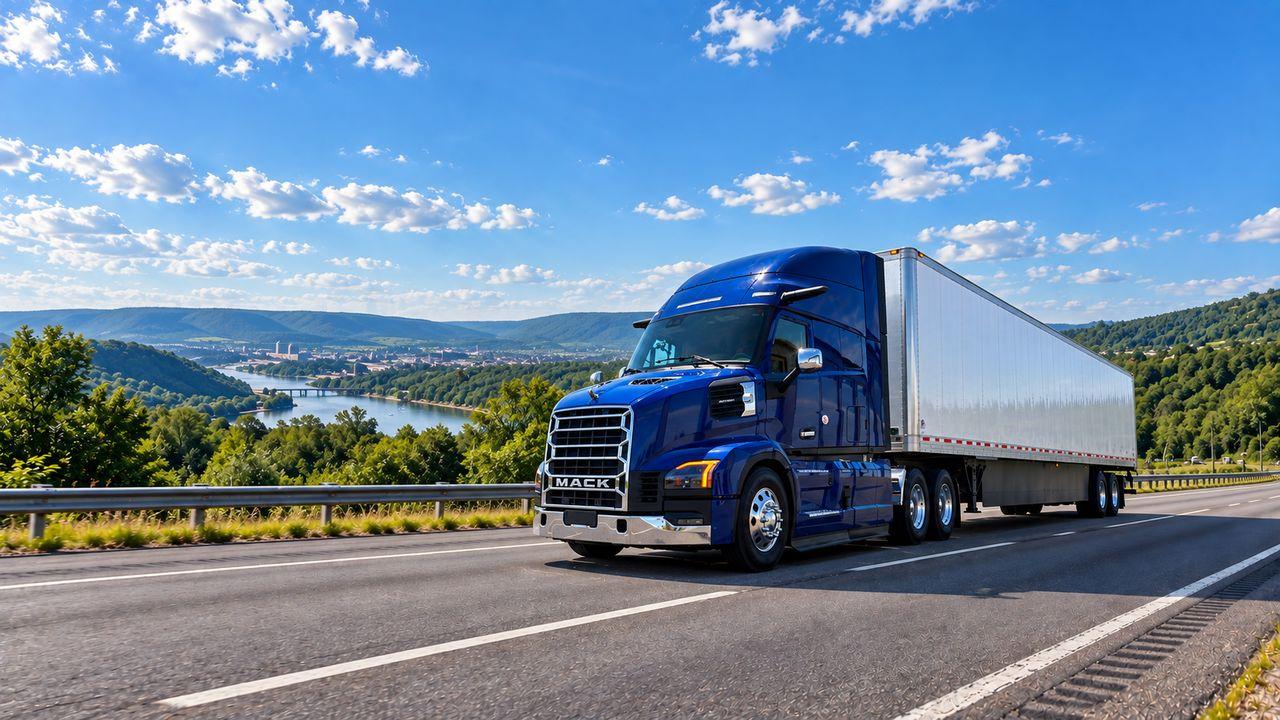
In 1917, British soldiers on the front lines in France looked at a blunt-nosed American truck and gave it a name: Bulldog. That name carried Mack for more than 100 years. Yet in 2023, Mack held just 6.8% of the US Class 8 market, the smallest share of the seven major brands. So what happened to the brand that once owned American roads?
This post covers the full Mack trucks history, from two brothers in Brooklyn to the Anthem. That's the truck Mack bet its highway future on. You'll get the best Mack models and my honest take on running a Mack over the road. You'll also get two maintenance problems that can cost you $4,000 to $10,000 or more if you miss them.
I'm Marko. I spent over a decade behind the wheel, and I've worked in almost every part of this industry. Now I run Truck Service Hub to help drivers like you. I ran aerodynamic trucks my whole career: Cascadias, Volvos, and T680s. On the highway, Mack wasn't the truck I saw every day. In my era, you could run a full week of highway miles and count the Macks on one hand.
But pull into a construction site, a quarry, or a heavy haul yard, and the Bulldog was everywhere. These trucks do the work that never gets glamorized. There are no chrome Instagram shots and no long-hood approval at truck stops. There's just work. And the drivers running them don't need anyone's approval. They get the job done.
Table of Contents
- The Full History of Mack Trucks
- Mack's Best Models: What Drivers Actually Think
- The Day My Camera Broke, and What It Reminded Me About Drivers
- Pro Tip: The Cooling System Problem on Older Mack E7 Engines
- Pro Tip: The Injector Cup Problem on Mack MP8 Engines
- Is a Mack Truck Worth Buying in 2026? My Honest Take on OTR
- Find Trusted Mack Shops (and a Better Company) at Truck Service Hub
- Frequently Asked Questions About Mack Trucks
- The Bulldog Is Still Here
The Full History of Mack Trucks
Mack has one of the longest stories of any truck brand still building in America. It starts with a carriage company and runs through a world war, a foreign takeover, and a long slide on the highway. Here's how it happened.
The Early Years: Brooklyn, 1893 to 1907
This story starts in Brooklyn, New York. In 1893, two brothers, John "Jack" Mack and Augustus "Gus" Mack, bought a small carriage and wagon company called Fallesen & Berry. They weren't building trucks yet. Nobody was. But Jack Mack could see what was coming.
The horse-drawn wagon was reaching the end of its run. Cities were growing, loads were getting heavier, and engines were getting more reliable every year. The Mack brothers bet on the motor before most of their competitors did.
In 1900, they delivered their first motorized vehicle: a bus for a sightseeing company in Brooklyn. That was the moment Mack became Mack. In 1905, the company moved its operations to Allentown, Pennsylvania. It stayed in Pennsylvania for about a century. Mack's headquarters didn't move to Greensboro, North Carolina, until 2010.
The first trucks followed in the early 1900s, chain-drive machines the brothers sold under the Manhattan name. They were simple and heavy. They were slow. But they worked, and "it works" became the foundation of everything Mack built afterward. It took a war to make the name famous.
World War I: How the Bulldog Was Born (1916 to 1922)
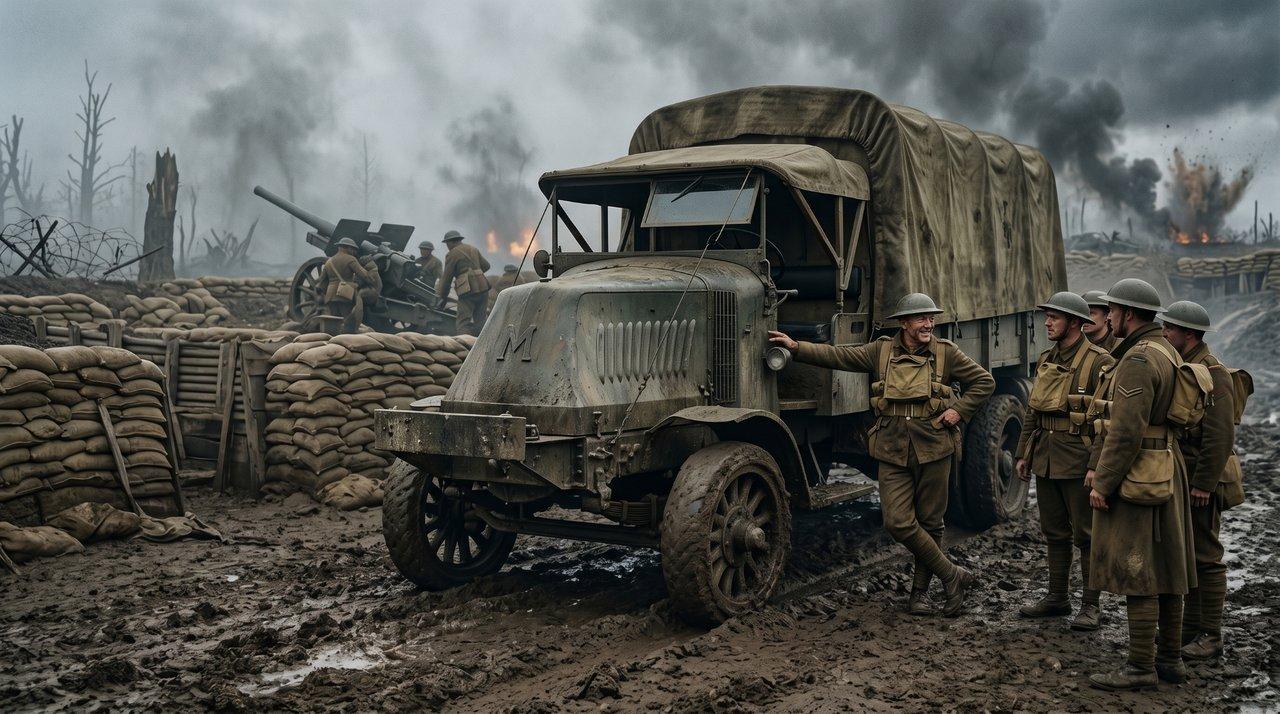
In 1916, Mack introduced the AC model. It had a blunt nose and a massive hood, and it was built for hard work. The British government bought them to haul supplies and heavy guns to the front lines in France. By some counts, more than 6,000 AC trucks were built for the British and American militaries.
What happened next made Mack famous forever. British soldiers started calling these trucks "Bulldog Macks." The blunt nose and the stubborn power reminded them of their country's own mascot, the British bulldog. So did the way the trucks kept going no matter what. The name spread from the front lines to everywhere else.
The bulldog showed up on Mack's chain-drive AB models in 1921. By 1922, it was the official Mack logo, and the company took the name Mack Trucks, Inc. that same year.
The Bulldog Becomes an Icon (1932 and Beyond)
The chrome bulldog on the hood came ten years after the logo. In 1932, chief engineer Alfred Fellows Masury carved the first Bulldog hood ornament from a bar of soap. He was recovering from surgery in the hospital at the time. He patented the design that October, and the ornament began showing up on Mack trucks in 1933. It even does a job: it works as a handle for opening the hood.
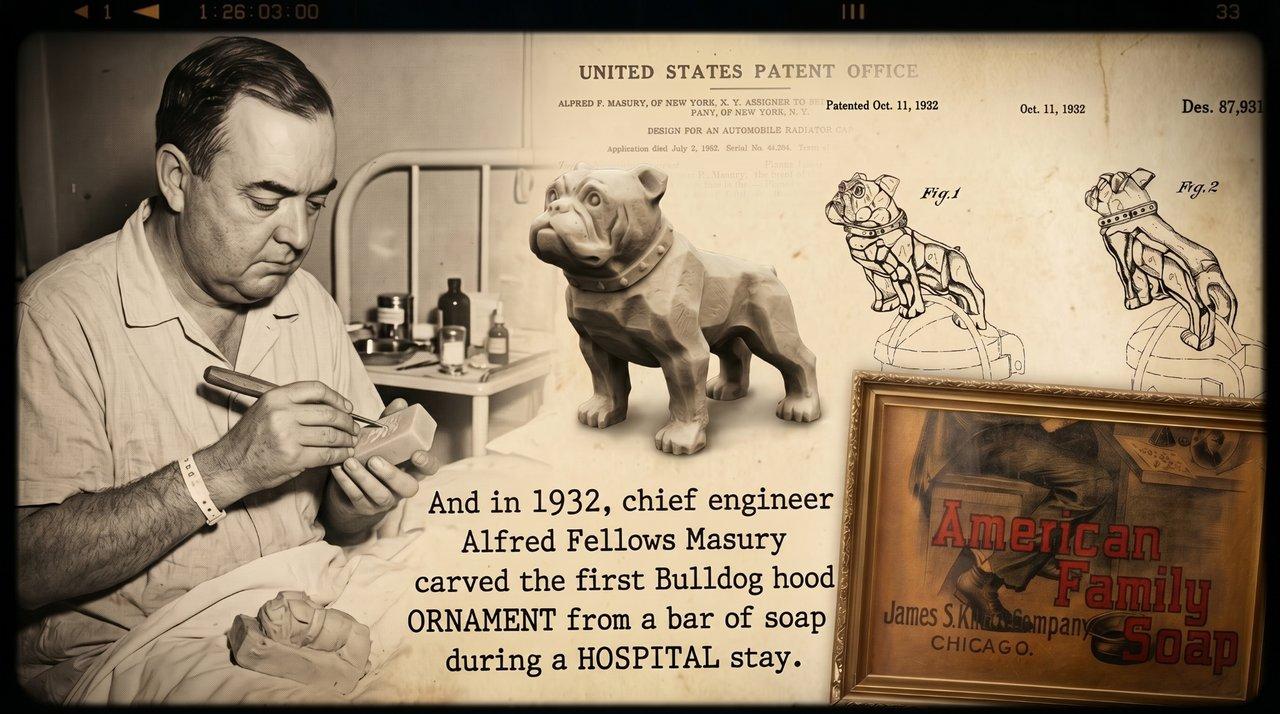
That soap carving became the chrome Bulldog you see on every Mack today. Masury didn't get to watch it become a legend. He died in 1933 in the crash of the US Navy airship Akron. One name and one ornament have carried more than a hundred years of meaning.
At some point, "Mack Truck" stopped being only a brand name and became a saying. "Built like a Mack truck." You hear it in everyday conversation, with nothing to do with trucking. People say it about football players, buildings, and engines. They say it about anything that's built different. A marketing team can't create that. A brand has to earn its way into the culture.
The Postwar Boom: L Series Workhorses (1940s to 1950s)
In 1940, Mack launched the L series. It carried America through World War II and straight into the postwar construction boom. The L series trucks were workhorses. They hauled concrete, steel, and everything else that rebuilt the country after the war. Roads, bridges, and construction sites were going up everywhere, and Mack was ready.
That's where Mack's reputation in construction and heavy work was built. It's the same reputation that keeps Mack dominant in vocational trucking today. The next two trucks turned that reputation into a golden age, and you'll meet both of them in the models section.
The Volvo Years: Ownership Change and Decline (1988 to 2017)
In 1988, Mack launched the CH series. It was more aerodynamic than the R model and got better fuel economy. It was a solid truck. But the highway market was changing fast. Freightliner, Kenworth, and Peterbilt were all pushing hard into long-haul, and Mack struggled to keep up.
Ownership was changing too. The French company Renault took a stake in Mack in 1979 and owned it outright by 1990. Then in 2000, Swedish manufacturer AB Volvo announced it would buy Renault's truck business, Mack included. That was the same year Mack celebrated its 100th anniversary. The deal was reported at about $2 billion, and it closed in 2001.
Some drivers cheered. Volvo's resources meant new technology. Others were angry, because a Swedish company now owned the Bulldog. On paper, the fit made sense. Mack was strong in vocational work and Volvo was strong in highway fleets. Together they would control roughly a quarter of the North American heavy truck market.
The years after the acquisition were tough for Mack on the highway. Mack still dominated vocational work: dump trucks, construction, and heavy haul. But over the road, market share kept dropping. For years, Mack has sat below 7 percent of the heavy-duty market. The brand that once owned and built American roads was fighting to survive on them.
The Bet: The Anthem Arrives (2017 to Today)
By 2017, Mack needed a real answer. The company introduced the Anthem, and production started in 2018. This was the truck Mack bet everything on. If it worked, Mack was a serious highway brand again. If it didn't, the Bulldog would be a vocational truck for good.
The Anthem didn't fix everything overnight. Market share still has room to grow. But for the first time since the R model era, drivers are choosing Mack for highway miles. They aren't doing it just because it's a Mack. They're doing it because the truck earned the spot. The Bulldog is back in the highway conversation. To see how, you need to know the trucks that got Mack here.
Mack's Best Models: What Drivers Actually Think
Four Mack trucks tell the whole story: the B model, the R model, the CH and Pinnacle, and the Anthem. Here's what each one was built for and what drivers say about it.
Mack B Model (1953 to 1966)
After World War II, America was building, and the B series was the truck for the job. Mack launched it in 1953 with a round nose, smooth lines, and a completely new look. Drivers loved it immediately. Over the next 13 years, Mack built nearly 128,000 B models. That wasn't just a popular truck. It was a staple of American industry.
Built for: quarries, construction sites, and heavy loads on bad roads. What drivers say: I've talked to a driver who ran a B model back in the day. He said the same thing every time: "That truck never let me down." For that kind of work, reliability wasn't a nice-to-have. It was everything, and the B model had it.
Mack R Model (1966 to 2005)
In 1966, Mack replaced the B series with the R model. It stayed in production for 39 years. Very few trucks in American history ran that long without a full replacement.
The R model is what most drivers picture when they say "Mack." It's boxy, tough, and simple. It had an air-ride cab, a built-in engine brake, and a drivetrain that made sense for hard work. The hood tilted forward, which gave mechanics easy access to everything underneath. Compared to the B model, the cab was taller, the windshield was nearly vertical, and the driver's seat adjusted for height. Mack's Maxidyne engine also made power at low RPM, so drivers shifted less.
Mack built multiple versions to cover every job. The standard R was for highway work. The lightweight RL, launched in 1967, used aluminum parts for fleets watching their weight limits. The RW Superliner, launched in 1977 with a big rectangular hood, was built for heavy haul. Whatever you needed to move, there was an R model for it.
What drivers say: the R model's motto was simple. It never quit. You could abuse it, push it hard, and run it into the ground, and it would ask for more. Mack built its market share on that reputation through the 70s and 80s. Best for: anyone who wanted a truck that was easy to fix and hard to kill.
Mack CH and Pinnacle: The Highway Attempts (1988 and 2006)
The CH series in 1988 was Mack's first serious swing at aerodynamics. Then in 2006, Mack launched the Pinnacle as the successor to the Vision, with the MP7 and MP8 engines. It had better aerodynamics and better fuel economy than the older trucks, and it was a real push for the highway. Drivers responded.
But it wasn't enough to close the gap. The Pinnacle still had a set-forward front axle, and Freightliner, Kenworth, Peterbilt, and Volvo were building aero-first trucks for long-haul. The Pinnacle found its home in day cab and regional work. Mack needed a truck built for the highway from the ground up.
Mack Anthem (2018 to Today)
The Anthem is that truck. It has full aerodynamics, a modern cab, and a design built specifically for long-haul highway competition. It's Mack's direct answer to the Freightliner Cascadia, the Kenworth T680, the Peterbilt 579, and the Volvo VNL 760. For the first time in a long time, Mack was serious about the over-the-road market.
Engines: the MP8 makes up to 505 horsepower. The MP7, a 10.8-liter engine, is the option for fleets watching fuel cost and running shorter hauls. Transmission: the mDRIVE is an automated manual, which most drivers just call an automatic. It gets strong reviews, and there's no clutch pedal to deal with. Cab: it's spacious, with ergonomics built for long days. Fuel economy: in highway testing, the Anthem returns around 9 MPG in steady linehaul. That's competitive. It's not a number you would have expected from Mack ten years ago.
Best for: regional haul and drivers who want a modern truck with Mack's toughness behind it. Shopping for one? Mack introduced a new generation of the Anthem in 2025, so check the model year before you buy. Before we get to the maintenance side, I need to tell you about something that happened while I was making this video.
The Day My Camera Broke, and What It Reminded Me About Drivers
Between my Peterbilt video and this one, the lens on my Sony A9 got stuck. Autofocus stopped working, and so did manual focus. I couldn't record.
I spent a lot of time researching what to do. Here's the problem. After a shop replaces the part, a machine has to calibrate the lens. That machine is expensive, and not many services are willing to do the work. The ones that are charge a lot. Finding a good technician was hard, and the repair wasn't cheap at all. I didn't want to lose more time, so for now I bought a Tamron fixed lens to keep filming.
But I have to be honest with you. That whole situation made me think. Whenever something breaks down in my life, my first thought goes to truck breakdowns. They're painful, and they cost a lot. A camera repair is nothing compared to a breakdown on the shoulder in the middle of nowhere. There's no warning and no backup. It's just you, the truck, and a bill you didn't plan for.
I complained about a camera lens. You guys are out there handling that every single day. So keep being strong. And keep in mind how brave every driver actually is, especially the ones who aren't running brand-new trucks. You have my respect.
That's exactly why the next two sections matter. There are a lot of older Macks still working, and the worst repair bills are the ones you didn't see coming. Both of these problems can be caught early.
⚠️ Pro Tip: The Cooling System Problem on Older Mack E7 Engines
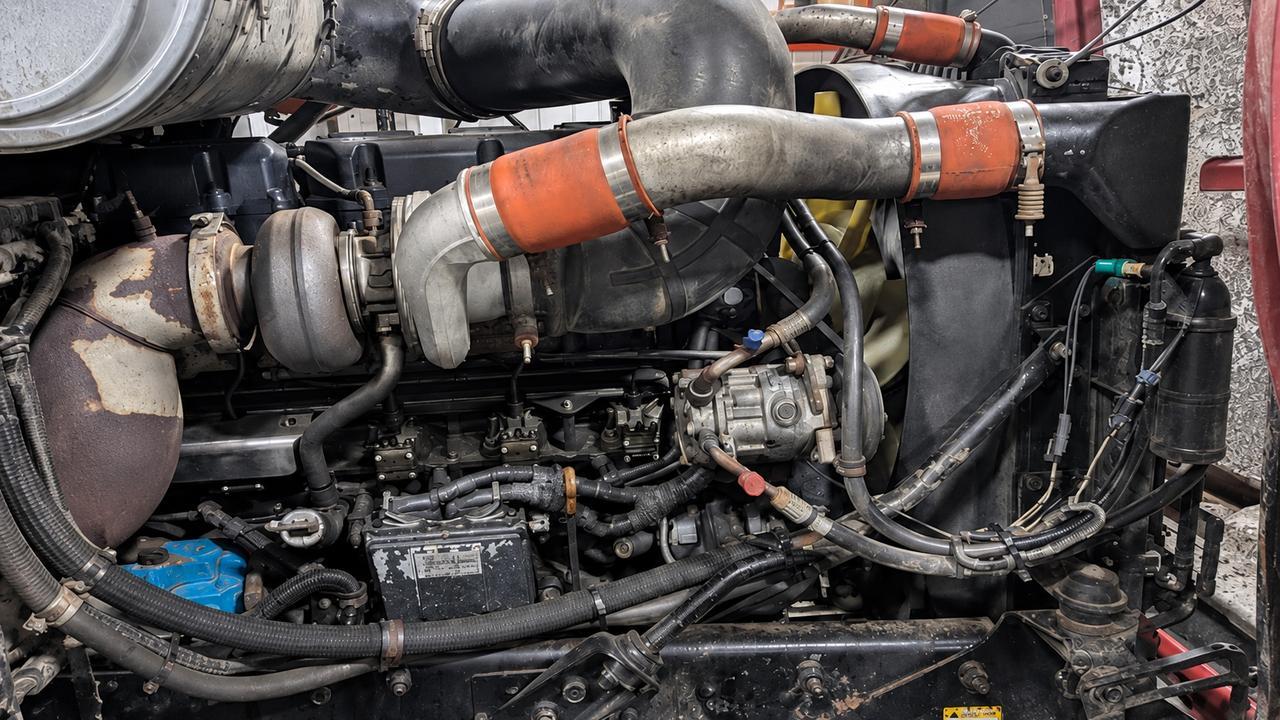
If you're still running an older Mack with an E7 engine, here's what to watch. There are a lot of them still out there. The engine itself is nearly bulletproof. The cooling system is the weak point.
- The part: Cooling system: water pump and coolant condition
- What happens when it fails: A small coolant leak or a failing water pump goes ignored until the cylinder head cracks
- Cost to fix now: A few hundred dollars
- Cost if you wait: ~$4,000 to $6,000 for a cracked head
- When to check it: Every oil change. Test your coolant pH each time.
Use only Mack-approved coolant. That one habit can save you thousands of dollars.
The E7 is the easy one. The next problem is on the engine Mack builds today, and it costs a lot more when you miss it.
⚠️ Pro Tip: The Injector Cup Problem on Mack MP8 Engines
Before we get to the comeback trucks, we need to talk about the MP8. This is Mack's main engine. It's a 12.8-liter built to last over a million miles if you take care of it. But there's one part that will get you if you're not paying attention.
If you're running an MP8, especially an EPA 2007 or 2010 engine, there's one part most mechanics will never bring up.
- The part: Copper injector cups
- What happens when they fail: Coolant and fuel begin to mix. You'll notice a diesel smell in your surge tank on a cold start, dark coolant, and fuel pressure dropping overnight. The engine stumbles below 1,600 RPM.
- Cost to fix now: ~$1,500 to $2,500, depending on region. That's around 10 hours of labor plus parts.
- Cost if you wait: ~$10,000 or more for a full fuel system replacement
- When to check it: Injector cups wear between 300,000 and 600,000 miles
Most mechanics won't walk you through this. They'd rather wait for the full failure and charge you $10,000. Don't let that happen.
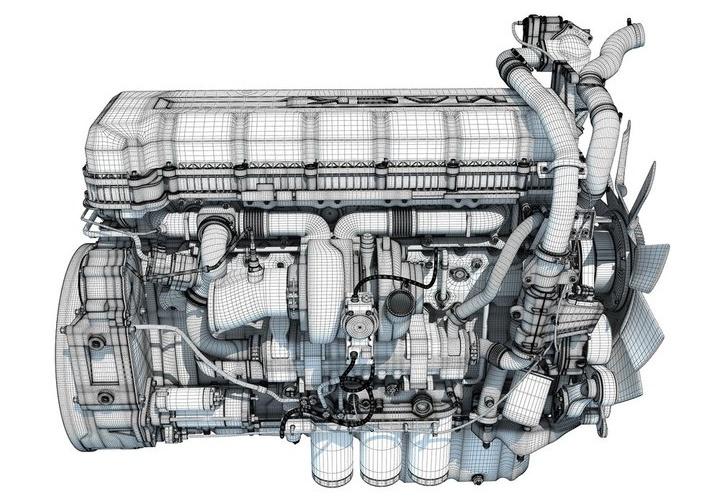
Here's how to catch it early. Look for air bubbles in your fuel return line while the engine is running. That's one of the easiest early signs, and it shows up long before the truck leaves you on the shoulder. Also keep your coolant maintained. Poor coolant quality eats those cups from the inside out. If you're unsure, ask your shop to test the coolant for fuel contamination at your next service.
Catch it early, replace the cups, and you've spent a manageable $1,500 to $2,500. Ignore it, and you're looking at a $10,000 bill. That's the difference between a planned shop visit and a tow truck.
Running a Mack earns you respect, but respect doesn't cover the truck payment. The company you drive for decides what you take home. I've seen good trucks stuck with bad dispatch, short miles, and settlements that didn't add up. That's a big part of why I built Truck Service Hub. Yes, it connects you with trusted shops and better fuel card rates. But my real job is helping drivers land with a company that treats them right.
Find a Better Company to Drive ForIs a Mack Truck Worth Buying in 2026? My Honest Take on OTR
Here's my honest take on Mack in the OTR world, because I think you deserve to know.
I talk to a lot of fleet owners, including the ones running Anthems on the highway. Most of them tell me the same thing. They got a good deal at the dealership. Or the Cascadia had a long wait time at that moment. Or the company assigned the truck to them. Not many guys are out there saying, "I'm a Mack guy, I'll always buy Mack." That's just the reality for OTR.
The numbers back it up. Mack held 6.8% of the US Class 8 market in 2023, the smallest of the seven major brands. Mack built its identity in construction and heavy vocational work, and on those job sites the Bulldog is still king. On the highway, it's a different story. Industry reporting says the Anthem has found more of its success in regional day cab work than in long-haul sleepers.
But here's what I will say. Once you put real miles on an Anthem, it earns your attention. The cab is solid. The MP8 runs clean. The mDRIVE won't take you down. It may not be your first choice, but it does the job. And in this industry, that matters.
The pros: a solid cab, a proven engine, a strong automated transmission, and around 9 MPG in steady linehaul. The real cons: a short highway track record and a small share of the OTR market. You also need to stay on maintenance, especially cooling and injector cups. Who it's best for: regional drivers and fleets that already run Mack in vocational work. It also suits drivers who get assigned one and want to know it's a good truck to live in.
If you're already in a Mack, the next section is for you. If you're still shopping, it's worth knowing who can keep that truck running.
Find Trusted Mack Shops (and a Better Company) at Truck Service Hub
Need a Chicago shop that knows the MP8 inside and out, a better deal on fuel, or a company that pays what it promises? Truck Service Hub puts all three in one place. We list trusted truck shops and trailer shops that understand the problems in this post. You'll also find better fuel card options for your miles. No guessing, just good service to keep you moving. Built by a driver, for drivers.
Explore Truck Service HubGot a question first? Contact us.
Frequently Asked Questions About Mack Trucks
Who owns Mack Trucks?
Volvo Group owns Mack Trucks. Volvo announced the purchase in 2000 as part of a deal for Renault's truck business, which owned Mack at the time. It completed the deal in 2001. Mack moved its headquarters from Allentown, Pennsylvania, to Greensboro, North Carolina, in 2010.
Why does Mack use a bulldog as its logo?
British soldiers in World War I nicknamed the Mack AC truck "Bulldog Mack" because of its blunt nose and stubborn toughness. The bulldog became Mack's official logo in 1922. In 1932, chief engineer Alfred Fellows Masury carved the first bulldog hood ornament from a bar of soap. That design became the chrome Bulldog on every Mack today.
Is the Mack Anthem good for over-the-road driving?
It can be. Mack built the Anthem for long-haul highway work. It comes with the MP8 engine (up to 505 horsepower), the mDRIVE automated transmission, and a roomy cab. It returns around 9 MPG in steady linehaul. Mack's identity is still vocational, though. Most OTR drivers I talk to run an Anthem because of a good deal, a long wait time on another truck, or a company assignment.
What is the most common Mack MP8 problem?
Injector cups. On EPA 2007 and 2010 MP8 engines, the copper injector cups wear out between 300,000 and 600,000 miles. When they fail, coolant and fuel start to mix. Replacing the cups early costs about $1,500 to $2,500. Waiting can turn it into a full fuel system replacement of $10,000 or more.
The Bulldog Is Still Here
Mack was never the highway glamour truck. It's the one in the quarry and on the job site, doing the work nobody films. The drivers who run it don't need validation. They already know. It started with a soap carving in a hospital bed and ended up as the chrome Bulldog on every hood. The name British soldiers gave it in 1917 is still doing its job. Built like a Mack truck still means something. And to every driver keeping an older Mack on the road, the camera lens was nothing. You're the ones handling the real bills, and you have my respect.
If you haven't read my Peterbilt story yet, go check out Peterbilt Trucks History: From 1939 to the Last Long Hood next. It's the story behind the 389, the most iconic truck in America. And I want to hear from you. Do you run a Mack on OTR, and did you choose it yourself? Or is Mack strictly a construction truck in your mind? Tell me in the comments. I read every one. Thanks for reading, and keep it safe out there.