Peterbilt Trucks History: From 1939 to the Last Long Hood
- Marko Cekerevac
- September 3, 2026
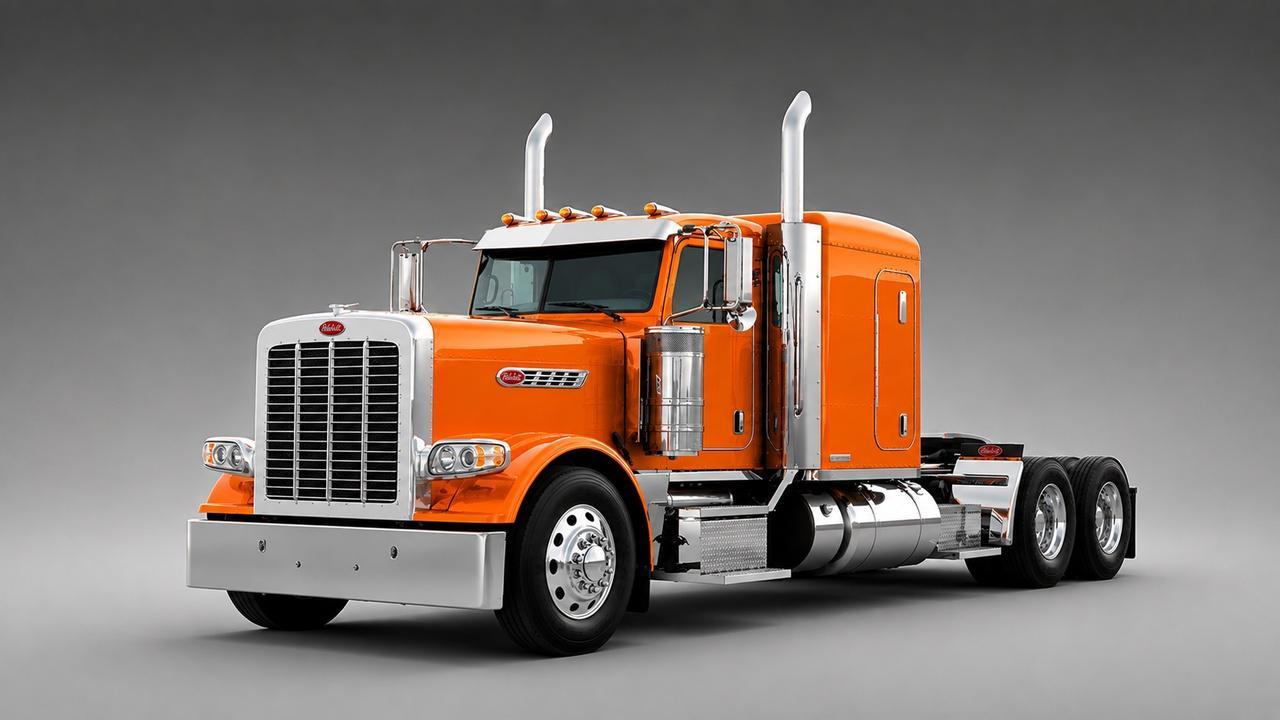
In April 1939, a logger-turned-entrepreneur named T.A. “Al” Peterman bought a bankrupt truck factory in Oakland, California, for $50,000. He built rugged, no-frills trucks for west coast loggers and never lived to see what his name became. In December 2024, Peterbilt built the last truck in what the company itself calls a 57-year, three-model dynasty — the 359, the 379, and the 389 — and closed the book on one chapter of the American long hood. Peterbilt had already unveiled its replacement the year before.
This post covers the full Peterbilt trucks history: how a small West Coast logging truck builder became a Hollywood icon and an owner-operator’s badge of pride, which models actually earned that reputation, what really replaced the 389 (it’s not what most “end of an era” articles tell you), how Peterbilt stacks up against its sister brand Kenworth, and two maintenance issues — one on the Cummins ISX, one on the PACCAR MX-13 — that can cost you thousands if you don’t catch them early.
I’m Marko. I spent over a decade as an OTR driver and now run Truck Service Hub, a platform that connects drivers with trusted shops, fuel cards, and better companies to drive for. I ran aerodynamic trucks my whole career — never a long hood Pete — but I’ve sat in enough of them, and talked to enough drivers who ran them, to understand exactly why they command the respect they do.
Table of Contents
- The Full History of Peterbilt Trucks
- Peterbilt’s Best Models — What Drivers Actually Think
- Peterbilt vs. Kenworth: What’s Actually Different
- Why the Long Hood Peterbilt Commands Respect
- Pro Tip: The Front Engine Mounting Plate Problem on the Cummins ISX
- Pro Tip: Fuel Quality and the PACCAR MX-13 (579)
- Peterbilt 389 Review: Is It Worth Buying in 2026?
- Find a Trusted Peterbilt Shop (and a Better Company) at Truck Service Hub
- Frequently Asked Questions About Peterbilt Trucks
- The Bottom Line on Peterbilt
The Full History of Peterbilt Trucks
The Early Years — Oakland, 1939
T.A. “Al” Peterman bought the old Fageol Truck and Motor Company factory in Oakland for $50,000. The first trucks rolled off the line in April 1939 — the Model 260 and the Model 334. Neither was built to impress anyone. They were built for loggers and west coast haulers who needed something that could take punishment on steep grades and unpaved logging roads, where a truck that broke down meant a lost day and a lost paycheck.
Peterman wasn’t a truck manufacturer before this — he was a logger who kept buying used Fageol trucks and modifying them himself because nothing on the market survived his job. Other loggers noticed and started asking him to build trucks for them too. That’s the real origin of Peterbilt: a company started by someone solving his own problem, not chasing a market. In the earliest years, output was tiny — a handful of trucks built essentially by hand — and that built-for-the-buyer approach never fully left the brand, even after it was building thousands of trucks a year.
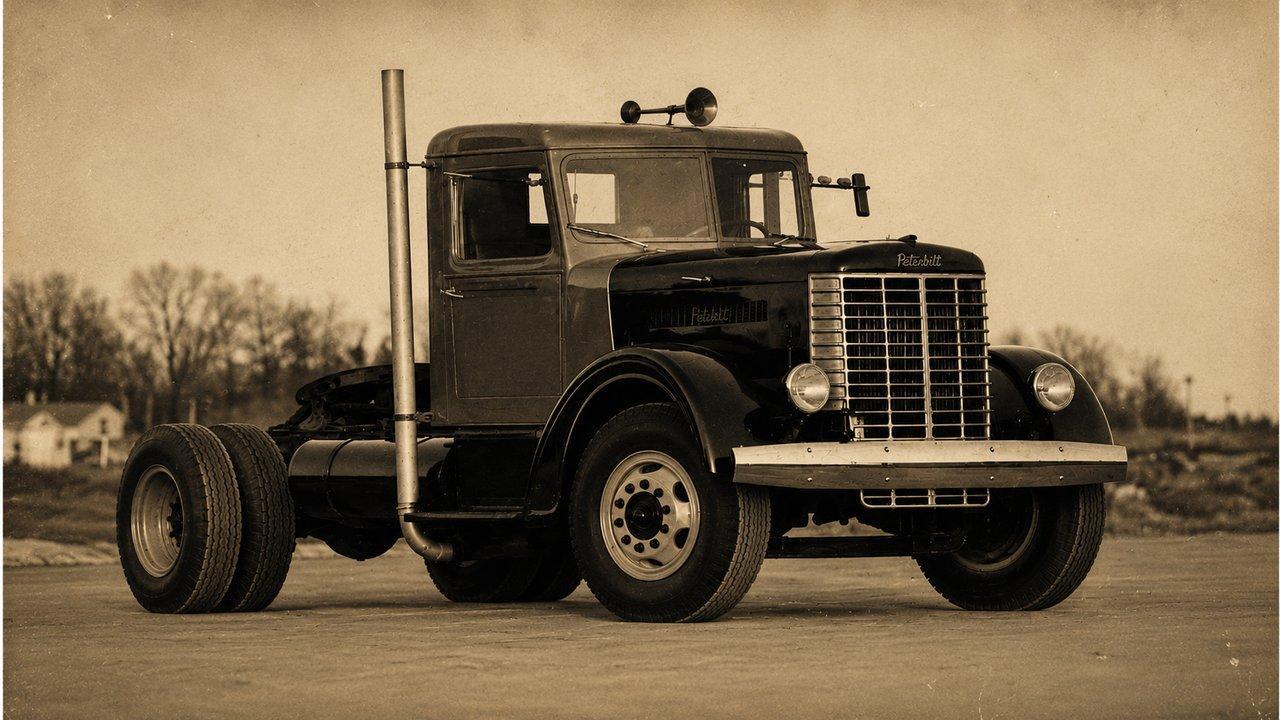
That’s an important detail most brand histories skip: Peterbilt wasn’t born in a boom. 1939 was still the tail end of the Depression, and the west coast logging industry Peterman was building for didn’t have room for a truck that looked good and broke down. Every early design decision came from that pressure — build it to survive the terrain, or don’t bother building it.
Peterman didn’t get to see how big it became. He died in 1944, just five years after founding the company. His heirs kept it running, and they kept it built the way he intended — rugged first, everything else second. That decision is the reason the brand still means something specific to drivers 87 years later: a Peterbilt was never the truck you bought because it was cheap. It was the truck you bought because it worked.
The Paccar Acquisition — 1958
In 1958, Paccar bought Peterbilt from the Peterman estate. Al’s heirs had kept the company alive for 14 years after his death, and by that point the brand was already a west coast legend — but a family estate isn’t built to scale a manufacturer nationally, and Paccar had the capital and distribution to do exactly that. Paccar paid for something that was already proven rather than trying to build a reputation from nothing. They kept the identity. They kept the name. They kept the philosophy that made the trucks worth buying in the first place.
That acquisition matters for a reason a lot of drivers don’t realize: Paccar also owns Kenworth. Two brands that compete head-to-head for the same owner-operator dollar have shared a parent company for close to 70 years. It’s a case study in how a corporate parent can scale up manufacturing and distribution without erasing what made a smaller brand worth owning in the first place — something the modern 579, and now the 589, still has to prove every day it’s on the road.
Hollywood Made It Famous — The 1970s and 80s
The factory moved from Oakland to Newark, California, and then to Nashville, Tennessee, in 1969, as the company scaled up production through the 50s and 60s building trucks for logging, construction, and long-haul work up and down the west coast.
Then came 1971, and a Spielberg TV movie called Duel put a Peterbilt on the map in a way no ad campaign ever could. The villain wasn’t an actor — it was a Peterbilt 281 chasing a man down a desert highway. Dark. Heavy. Unstoppable. Audiences walked out of that film wanting the truck, not fearing it.
Nine years later, Smokey and the Bandit II put a chromed-out Peterbilt 359 on screen — long hood, so clean people stopped the scene just to look at it. Two movies, two Peterbilts, and by 1980 the entire country knew the name, whether they’d ever set foot near a truck stop or not.
That timing wasn’t an accident. The whole decade was a trucking culture boom — CB radios in every cab, trucker slang crossing into everyday speech, truckers cast as folk-hero outlaws instead of background labor. Peterbilt landed in the middle of that moment with a truck that photographed like a movie star, and it never fully lost that reputation.
The 389 Retires — and the 589 Takes Over (2024)
The Model 389 replaced the 379 in 2008 with a longer hood, oval headlights, and even more presence on the road. It ran for 16 years, and drivers saw the end coming — Peterbilt announced the 389 would retire, and orders spiked hard in the final two years of production, with people buying new units specifically to hold onto, not to run into the ground.
Here’s the part most brand-history articles get wrong, because they stopped paying attention once the last 389 rolled off the line in December 2024: Peterbilt didn’t actually let the long hood die. Peterbilt first showed its replacement, the Model 589, to the world in 2023 at the Mid-America Trucking Show, then ramped up full production in January 2024 — a year before the last 389 was even built. The 589 keeps the classic long-hood silhouette, in the same 121-inch or 131-inch proportions as the 389, and a nod to the brand’s own history baked into the design. The top trim, the “Legendary” package, literally carries Peterbilt’s original 1939 script logo — 85 years after that first Model 260 rolled out of Oakland.
It wasn’t a quiet launch, either. Peterbilt built more than 6,000 Model 589s in its first year on the market, and according to the company’s own general manager, that order volume matched a typical year for the 389 at its peak — historically about 20% of Peterbilt’s entire order book. Long-time 389 owners embraced it fast, and it’s already found a strong following in the aftermarket.
That’s not a coincidence, and it’s not marketing spin — it shows up in the numbers. Peterbilt closed out a recent year with a record 15.3% share of the North American heavy-duty truck market, and the 589 was one of the biggest reasons why. The 57-year, three-model dynasty — 359, 379, 389 — really did end in December 2024. But the long hood itself didn’t. It just changed its model number.
So if you’re wondering whether resale on a late-model 389 is worth paying attention to: it is, and for the reason you’d expect. Production is closed, permanently, on that exact model — some 2020 model-year units are already selling for more than their original sticker price, and that trend is only getting stronger the further the 389 gets from being a truck you can order new. A clean 389 right now isn’t just a work truck. It’s an appreciating asset, and for an owner-operator thinking about what to do with their next equipment dollar, that’s worth paying attention to.
Peterbilt’s Best Models — What Drivers Actually Think
Model 379 (1987–2007) — The American Icon
Any Peterbilt 379 history has to start in 1987, when the model launched and stayed in production for 20 years — longer than any other model in company history. It was a pure owner-operator truck: long hood, fully spec’d to the driver’s taste, chrome exhaust stacks, custom interior, your name on the door if you wanted it there. You picked your own engine — Cummins ISX, Detroit Series 60, or Cat C15 — and built the truck around it.
Drivers have put well over a million miles on these trucks. One owner-operator ran his original ISX to 1.5 million miles without a rebuild — not because the engine was magic, but because he maintained it right, every single time. The 379 wasn’t just the best-selling Peterbilt ever built. It became shorthand for what a truck is supposed to look like — the shape kids draw when you ask them to draw a semi.
That cultural weight got a permanent boost in 2007, when Transformers cast a modified 1994 Peterbilt 379 — blue cab, red flames, chrome stacks — as Optimus Prime. Director Michael Bay said he picked it because the moment he saw a photo, it looked like the boss, like nothing could stop it. He was right. That film introduced a whole new generation to Peterbilt, and some of those kids grew up and bought one.
Model 389 (2008–2024) — The Last of Its Line
The 389 took over from the 379 in 2008 with a longer hood and oval headlights, and carried the long-hood tradition for 16 more years until Peterbilt closed the line in December 2024. It’s the truck that ended the 57-year, three-model dynasty, which — combined with a production run that’s now permanently closed — is exactly why resale values are climbing the way they are. If you own a clean one, this is not the moment to let it go cheap. And if you’re shopping for a new long hood instead of a used one, its replacement is covered next.
Model 589 (2023–Present) — The Long Hood’s New Chapter
Peterbilt unveiled the 589 in 2023 at the Mid-America Trucking Show and moved into full production in January 2024 — Peterbilt’s answer to an obvious question: what do you build after the 389, the truck that defined the brand for 16 years, finally retires? The exterior keeps the classic long-hood silhouette in the same 121-inch or 131-inch BBC (bumper-to-back-of-cab) proportions drivers expect, and the top trim, the “Legendary” package, puts Peterbilt’s original 1939 script logo on a truck built 85 years after that first Model 260.
The bigger changes are inside. The 589 comes with what Peterbilt calls the Ultimate Studio Cab — a full redesign with more headroom, better ergonomics, larger windows, and storage the 379 and 389 never had. Under the hood, it runs a PACCAR MX-13 rated at 510 horsepower, built in-house instead of sourced from Cummins or Cat, and it meets current emissions standards without losing the look.
Drivers who spent years in a 389 have embraced it faster than most new model launches in this industry ever manage. Peterbilt built more than 6,000 of them in year one — an order volume that matched what the 389 used to pull in at its peak, when it represented roughly one in every five trucks Peterbilt sold. That’s not a niche product. That’s the flagship, just wearing a new model number.
If you’re cross-shopping a used 389 against a new 589, the honest answer is that you’re choosing between proven history and a truck that’s already on track to earn its own. Neither is the wrong call.
Model 579 (2012–present) — The Company Driver’s Peterbilt
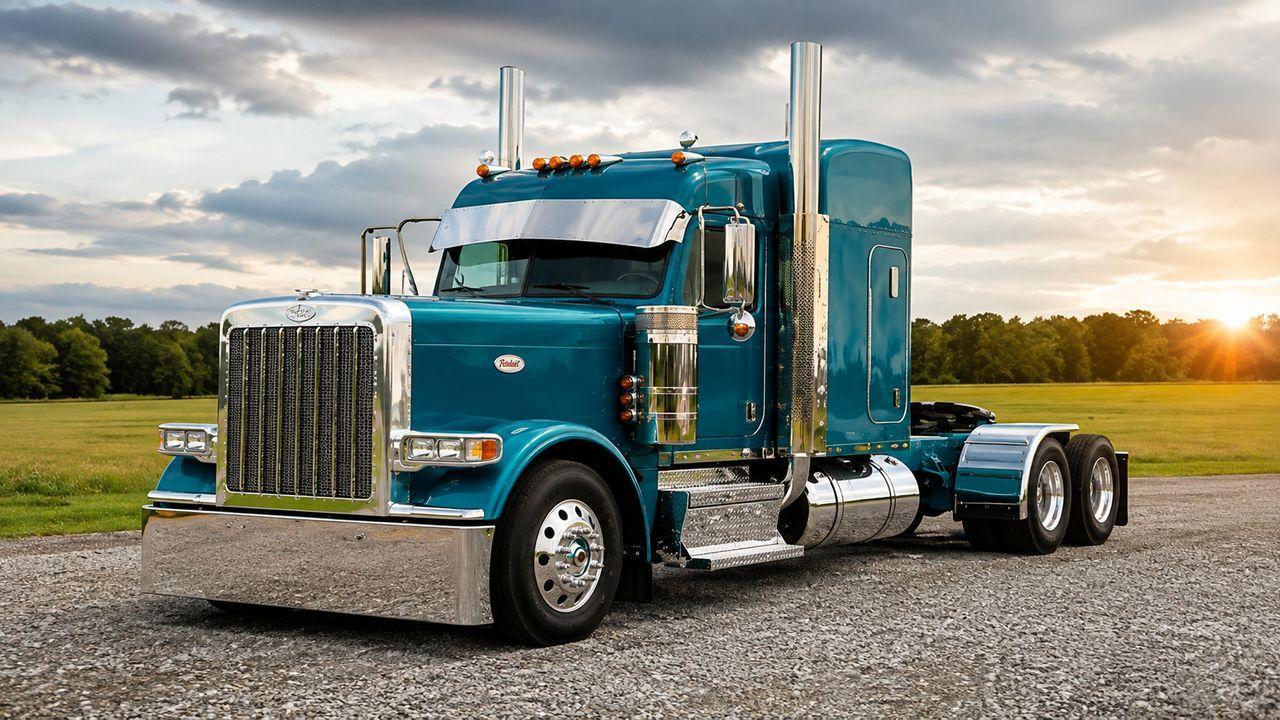
The 579 launched in 2012 as a wide, aerodynamic cab built around Paccar’s in-house MX-13 engine, designed for fuel economy and modern emissions compliance rather than road presence. It’s a genuinely solid truck — just not the same category as a long hood. Less identity, more efficiency. It’s the Peterbilt most company drivers are actually running today.
For fleets, that trade-off is the whole point. A fleet doesn’t care whether heads turn in a parking lot — it cares about fuel burn per mile and whether the truck meets emissions requirements without a fight. The 579 is Peterbilt’s answer to that math, and it’s a big part of why the brand has stayed relevant with fleet buyers even as the long-hood models became more of an owner-operator and collector story.
Peterbilt has kept expanding what’s under the hood here too. Beyond the PACCAR MX-13, the 579 — along with the 567 and 520 — can now be ordered with the Cummins X15N natural gas engine, aimed at fleets chasing lower fuel costs and stricter emissions targets rather than outright power.
Model 567 (2013–present) — Built for Vocational Work
Peterbilt introduced the 567 in 2013 to cover vocational work the 579 wasn’t built for — construction, dump, and heavy haul applications. It shares the MX-13 with the 579, and it’s a capable, purpose-built truck. But ask any driver who’s owned a long hood Pete, and they’ll tell you straight: neither the 579 nor the 567 is a 379 or a 389, and it isn’t trying to be.
Peterbilt vs. Kenworth: What’s Actually Different
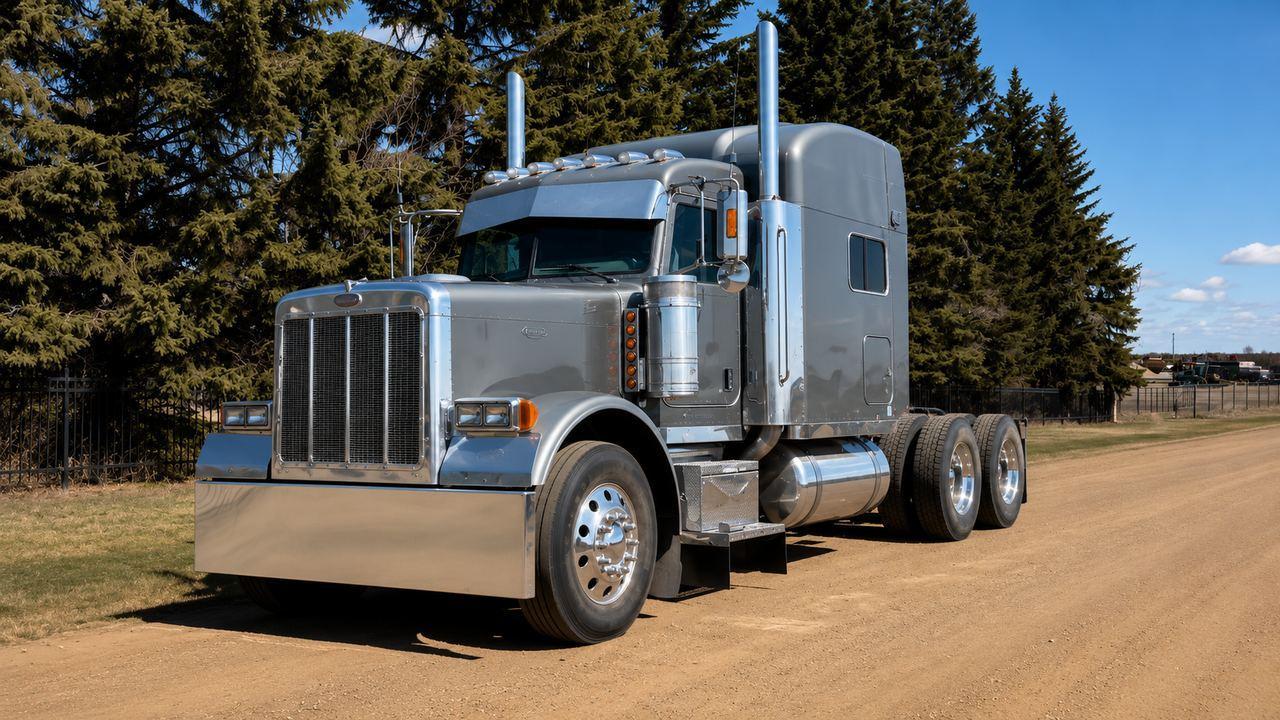
Every driver who’s spent time around trucks has had this argument at a truck stop: Peterbilt or Kenworth? It’s a fair question, because the two brands have been fighting for the same customer under the same parent company for close to 70 years, and neither one is going to tell you the other one is better.
Here’s the honest version of Peterbilt vs Kenworth, from someone who isn’t selling either one.
Styling and identity. Peterbilt leans harder into heritage and road presence — the long hood, the script logo, the customization culture that lets an owner-operator build a truck that looks like nobody else’s. Kenworth’s long-hood answer, the W900, has its own loyal following and its own decades of Hollywood and racing cred, but Kenworth as a brand has generally put more of its marketing weight behind driver comfort and cab ergonomics than outright styling.
Customization. Both brands let an owner-operator spec almost everything — engine, interior, paint, chrome. That’s a Paccar-wide philosophy, not something unique to either badge. The real difference shows up in resale culture: a heavily-customized Peterbilt long hood tends to hold a very specific kind of value with long-hood buyers that a similarly-specced Kenworth doesn’t always match, mostly because of how deep the long-hood identity runs for Peterbilt specifically.
Dealer network and parts. Because Paccar owns both, parts availability and dealer coverage are close to a wash in most parts of the country. If you’re picking a truck based on which brand has a shop near your regular routes, that’s a better question for a local search than a brand loyalty debate.
The honest take. If you want the truck that turns heads at a truck stop and carries decades of pop-culture weight, that’s a Peterbilt — specifically a long hood 389 or the new 589. If you want a truck built by the same parent company with a stronger reputation for cab comfort and ergonomics on long hauls, plenty of drivers will make the Kenworth argument. Neither one is objectively wrong. It comes down to what you’re actually optimizing for — how the truck looks when you climb down from it, or how your back feels after twelve hours in the seat.
Either way, the reason people get emotional about a long hood — any long hood — is the same reason I can’t stop thinking about what happens when you actually sit in one.
Why the Long Hood Peterbilt Commands Respect
I spent my whole career in aerodynamic trucks. I never ran a long hood Pete. But I noticed the effect a Peterbilt has on a parking lot long before I understood it — at truck stops, at rest areas, on the highway. When a long hood Pete pulled in, everyone looked. Drivers, mechanics, people who had nothing to do with trucks at all.
There’s an attitude that comes with a Peterbilt. Pride. I had the chance to sit in one, and I understood it immediately. It’s not arrogance — it’s earned respect. It’s the kind of truck that makes you stand a little taller when you step out of the cab, because you spec’d every part of it yourself and you know exactly what’s under that hood.
I’ve got a massive amount of respect for these trucks and for the drivers who run them. Everything in this post comes from that place — not from a spec sheet, but from watching what actually happens when one of these trucks rolls into a lot.
That respect is exactly why I take it seriously when I hear about a long-hood Pete getting nickel-and-dimed by a shop that doesn’t know the truck, or a driver running one of these getting underpaid by a company that doesn’t value what he’s hauling. A truck like that deserves people around it — mechanics, dispatchers, carriers — who take it as seriously as the driver does.
⚠️ Pro Tip: The Front Engine Mounting Plate Problem on the Cummins ISX
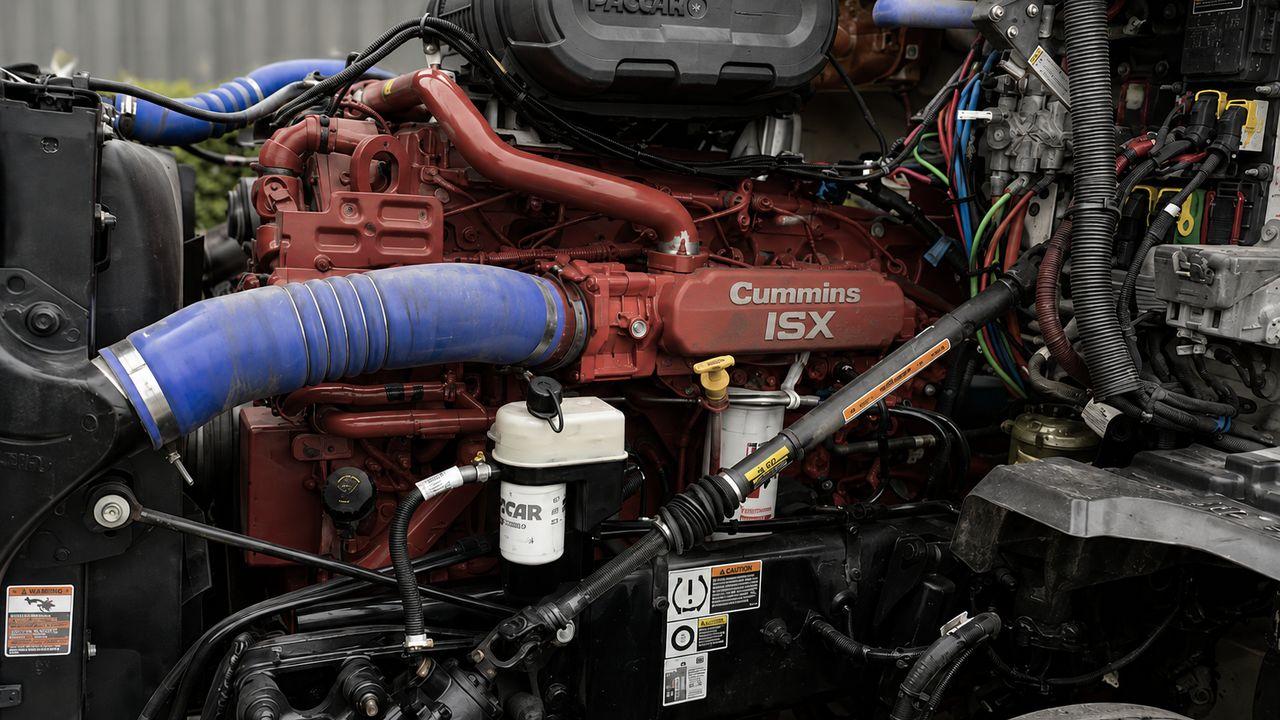
If you’re running an older 379 or 389 with the Cummins ISX, there’s one thing most mechanics will never bring up on their own. This is one of the most common Cummins ISX problems on these trucks — and also one of the easiest to catch early if you know to look for it.
- The part: Front engine mounting plate
- What happens when it fails: It warps over time. When it warps, you get oil leaks — small at first, then progressively worse. Most mechanics will call it a minor seal issue and patch it instead of addressing the real problem.
- Cost to fix now: ~$1,500–$2,500 (inspection and plate replacement, parts and labor)
- Cost if you wait: ~$10,000+ if oil contamination reaches the wrong parts of the engine
- When to check it: Proactively, on any older 379 or 389 running the Cummins ISX — don’t wait for symptoms
Most shops won’t mention this. A proactive $1,500 fix doesn’t make them money the way a $10,000 repair does.
Owning a Peterbilt earns you respect at every truck stop in the country. But respect doesn’t make the payment on that 389. I’ve talked to plenty of long-hood drivers running incredible trucks for companies that pay them like they’re driving a beat-up day cab — bad miles, bad freight, dispatch that never picks up. That’s the real reason I started Truck Service Hub: not just shops, not just fuel cards — I help drivers find better companies to drive for.
See Open Positions⚠️ Pro Tip: Fuel Quality and the PACCAR MX-13 (579)
If you’re running a 579 with the MX-13, watch your fuel quality closely. This engine is sensitive to contaminated diesel — water in the tank, sediment, or bad fuel from a cheap pump.
- The part: Fuel system on the PACCAR MX-13
- What happens when it fails: Rough idle, black smoke from the exhaust, misfires under load, and fuel economy that suddenly drops for no obvious reason
- Cost to fix now: ~$300 for a fuel system flush — do this immediately when you buy a used 579
- Cost if you wait: Up to $5,000 in injector damage if the previous owner ran bad diesel and you never checked
- When to check it: At the point of purchase on any used 579, before you put real miles on it
One more thing on this engine: don’t idle it for long stretches. The DEF and DPF systems clog faster when the truck sits at idle for hours. Keep the load on the engine and it keeps burning clean.
Peterbilt 389 Review: Is It Worth Buying in 2026?
Peterbilt was never the cheapest option. Never the most aerodynamic. On a long hood, it’s never going to beat a 579 at the pump. Those are real trade-offs, and anyone telling you otherwise is selling something.
Here’s what you’re actually paying for. Resale on the 379 and 389 is holding up in a way most trucks don’t — some 2020 389 units are already selling above their original sticker price, and that trend is only getting stronger now that the model is permanently out of production. You’re buying into a closed run, not an open one. Add in a parts and service network built around decades of long-hood ownership, and full customization that lets an owner-operator build a truck that’s genuinely theirs, and the premium starts to make sense.
If a used 389 isn’t available in your price range or condition, the 589 is a real answer, not a downgrade — it’s already pulling order numbers that match the 389’s best years, and it comes with a warranty and a dealer network a decade-old truck can’t offer.
The real cons are mechanical, not emotional: an older ISX-powered 379 or 389 needs the front engine mounting plate checked before it becomes a $10,000 problem, and a used 579 needs a fuel system flush at purchase before a bad tank of diesel turns into a $5,000 injector bill. Neither issue is a reason to walk away — they’re reasons to budget for an inspection before you sign, ideally from a shop that already knows these engines.
Bottom line: if you’re an owner-operator who wants a truck that builds equity while you drive it, a clean 389 — or a new 589 if you’d rather not gamble on a decade-old truck — is one of the stronger buys in the industry right now. If you’re a company driver who just needs an efficient daily truck, the 579 or 567 will serve you fine — just don’t expect the same reaction when you pull into a truck stop.
Find a Trusted Peterbilt Shop (and a Better Company) at Truck Service Hub
Whether you need a trusted Peterbilt shop that actually knows the difference between an ISX and an MX-13, a better fuel card deal, or a company that pays you what a long-hood driver is worth — Truck Service Hub has all of it in one place. Built by a driver, for drivers.
Explore Truck Service HubFrequently Asked Questions About Peterbilt Trucks
How many miles will a Peterbilt with the Cummins ISX last?
With regular maintenance, ISX-powered 379s and 389s routinely run past a million miles. One driver we talked to ran his original ISX to 1.5 million miles without a rebuild — the key is catching small issues, like a warped front engine mounting plate, one of the most common Cummins ISX problems on these trucks, before it becomes an expensive one.
Did Peterbilt discontinue the long hood truck?
No. Peterbilt ended the 389 in December 2024, closing out a 57-year, three-model dynasty that started with the 359. But the long hood didn’t disappear — Peterbilt had already unveiled its replacement, the Model 589, back in 2023 and ramped up full production in January 2024. The 589 kept the same long-hood proportions and even carries Peterbilt’s original 1939 script logo on its top trim, and it’s already selling at a pace that matches the 389’s best years.
Is the Peterbilt 589 as good as the 389?
It’s early, but the signs are strong. Peterbilt built more than 6,000 Model 589s in its first year, and the company says that order volume is comparable to a typical year for the 389 at its peak. Long-time 389 owners have adopted it fast, and it’s already gaining traction in the aftermarket — usually a sign a model is going to stick around, not fade out.
Is Peterbilt the same company as Kenworth?
Yes. Both Peterbilt and Kenworth are owned by Paccar, which bought Peterbilt from the Peterman family estate in 1958. The two brands are built and marketed separately, but they’ve shared a parent company for close to 70 years — which is why the Peterbilt vs Kenworth debate never really settles.
What’s the difference between a Peterbilt 379 and a 389?
The 389 replaced the 379 in 2008. It has a longer hood, oval headlights, and more road presence, but shares the same owner-operator DNA. The 379 ran for 20 years (1987–2007), the longer production run of the two; the 389 ran until December 2024, when Peterbilt built the last long hood of that specific model line.
Is a used Peterbilt 389 a good investment?
Increasingly, yes. Since Peterbilt ended 389 production in December 2024, resale values have climbed — some 2020 model-year units are already selling for more than their original sticker price. For owner-operators, a clean 389 is as much an asset right now as it is a work truck.
Why is the Peterbilt 379 considered an American icon?
Two things did it: real-world reliability that let drivers put over a million miles on a single truck, and pop culture. A Peterbilt 281 played the villain in Duel in 1971, a chromed 359 stole scenes in Smokey and the Bandit II in 1980, and a modified 1994 Peterbilt 379 became Optimus Prime in Transformers in 2007. Very few trucks have that kind of cultural footprint — most of it earned before social media even existed.
The Bottom Line on Peterbilt
Peterbilt was never the cheapest truck on the lot. Never the most aerodynamic. Never the easiest on fuel. But over 87 years — across a 57-year run of three long-hood legends, and now a fourth carrying the torch — it built something you can’t buy with a marketing budget: a reputation earned on the road, not in an ad campaign. When a long hood Pete pulls into a truck stop, people still look up. That was true when it was a 379 in 1995. It’s still true now that it might be a 589.
Peterbilt and Kenworth share the same parent company today, which is exactly why the debate between them will never fully settle — and why plenty of drivers will keep having it at every truck stop in the country.